Pemberdayaan Ibu Rumah Tangga melalui Literasi Manajemen Keuangan untuk Penguatan Usaha Mikro
DOI:
https://doi.org/10.55837/di.v4i1.143Keywords:
financial literacy, housewives, financial management, micro businessAbstract
Housewives play a strategic role in maintaining household economic resilience, both as family financial managers and as micro-entrepreneurs. This community service program aimed to empower housewives through financial management literacy, particularly in separating family and business finances and preparing simple financial statements. The program was conducted offline in Batu Ampar, East Jakarta, involving 14 housewives who manage micro businesses. The methods used were participatory lectures, interactive discussions, and technical assistance. The evaluation results indicated a significant improvement: before the training, only 35% of participants were able to distinguish between household and business finances, which increased to 85% after the training. In addition, 80% of participants were able to independently prepare simple financial reports. This program demonstrates that practice-based financial literacy can enhance housewives’ capacity in managing both family and business finances, thereby strengthening their contribution to household and community economic resilience.
References
Dewi, F., & Nugroho, A. (2023). Household financial literacy and its impact on microenterprise sustainability. Journal of Small Business Strategy, 33(2), 112–128. https://doi.org/10.1234/jsbs.2023.112
Kementerian Koperasi dan UKM Republik Indonesia. (2023). Perkembangan data UMKM tahun 2023. Kemenkop UKM. https://kemenkopukm.go.id
Kristaung, R. (2023). Digital transformation and sustainable empowerment of Indonesian MSMEs. Dirkantara Indonesia: Jurnal Pengabdian Kepada Masyarakat, 3(2), 45–57. https://journal.fourzero.id/index.php/di/article/view/128
Mulyani, S., Darmawan, A., & Yusuf, A. (2022). Financial literacy and access to credit: Evidence from Indonesian microenterprises. Asian Journal of Business and Accounting, 15(2), 75–96. https://doi.org/10.22452/ajba.vol15no2.4
OECD. (2023). The digital transformation of SMEs: Enabling innovation, competitiveness and sustainability. OECD Publishing. https://doi.org/10.1787/df56b3a0-en
Otoritas Jasa Keuangan. (2022). Survei nasional literasi dan inklusi keuangan 2022. OJK. https://www.ojk.go.id
Prasetyo, A., & Nugraha, D. (2021). Challenges of financial management among Indonesian microenterprises. International Journal of Entrepreneurship, 25(4), 45–59. https://doi.org/10.4774/ije.2021.254
Setiawan, H. (2024). Learning by doing: Enhancing financial literacy of microentrepreneurs through practice-based training. International Journal of Accounting and Education, 6(1), 22–38. https://doi.org/10.1177/ijaae.2024.112
Wijayanti, R., & Dewi, K. (2023). Case-based training for financial literacy improvement of women entrepreneurs. Journal of Financial Services Marketing, 28(3), 241–253. https://doi.org/10.1057/s41264-023-00158-9

Downloads
Published
How to Cite
Issue
Section
License
Copyright (c) 2025 Agustina Suparyati, Elyana Amran, Masfar Gazali, Ovy Noviati Nuraini Magetsari

This work is licensed under a Creative Commons Attribution-NonCommercial-ShareAlike 4.0 International License.
Most read articles by the same author(s)
- Agustina Suparyati, Sumiyarti Sumiyarti, Rahmadianti Thomas, Sosialisasi Konsep Bankable dalam Pengelolaan Bank Sampah: Studi Pengabdian Masyarakat di Desa Mangunjaya, Kabupaten Bekasi , Dirkantara Indonesia: Vol. 4 No. 1 (2025): Maret-Agustus 2025
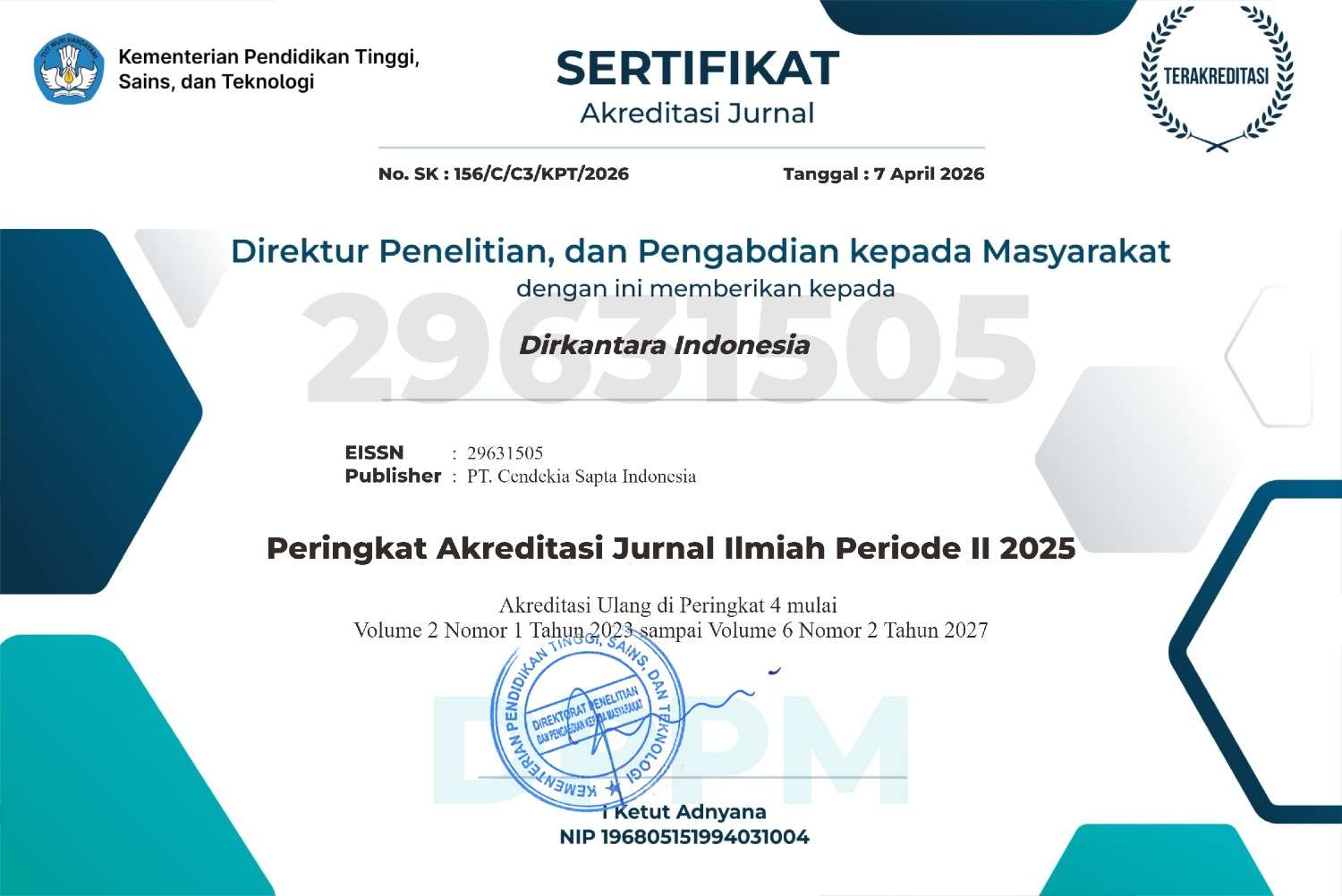
Sertifikat Sinta 4
No. SK: 156/C/C3/KPT/2026
Template

Indexing